Skip to content

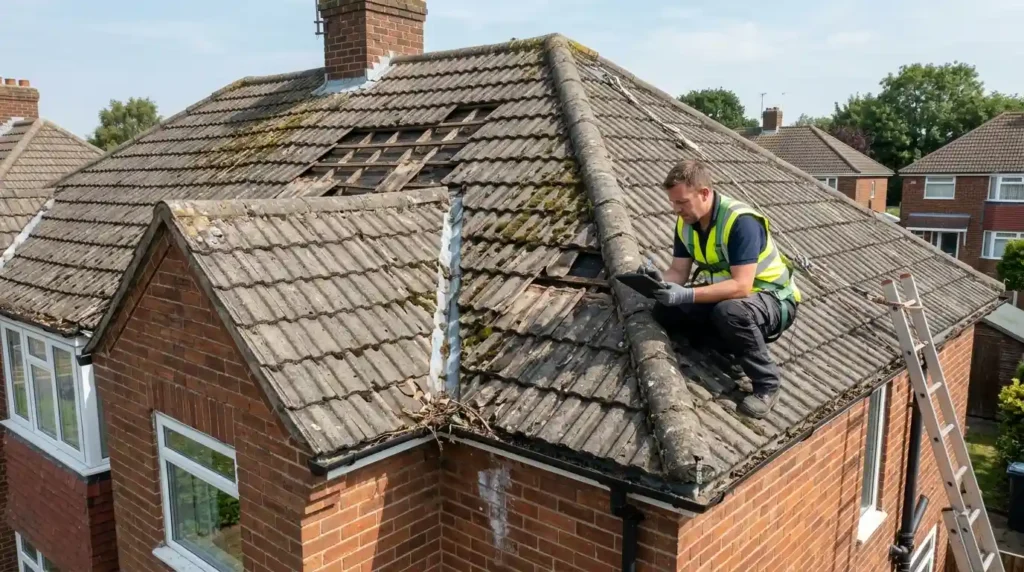
A roof can last for several decades, but there is no single lifespan that applies to every roof.
The roofing material, installation quality, weather exposure, ventilation, drainage and maintenance can all affect how long a roof remains in good condition.
For example, current UK guidance from Checkatrade gives typical lifespans of around 40–75 years for concrete tiles, 50–100+ years for clay tiles and 75–200 years for natural slate. Modern EPDM flat roofing systems can last around 40–50+ years when properly installed.
This means the age of your roof is useful information, but age alone does not tell you whether it needs replacing.
A well-maintained older roof may continue performing well, while a much newer roof may need repairs if it has suffered damage or poor installation.
Average Roof Lifespan by Material
Here is a general guide to how long common UK roofing materials can last.
| Roofing Material | Typical Lifespan |
|---|---|
| Concrete roof tiles | 40–75 years |
| Clay roof tiles | 50–100+ years |
| Natural slate | 75–200 years |
| EPDM flat roofing | 40–50+ years |
| GRP fibreglass | Around 25–30 years |
| Other flat roofing systems | Varies significantly |
These figures are general ranges rather than guarantees. Actual lifespan depends on the product, installation, exposure and maintenance.
1. How Long Do Concrete Roof Tiles Last?
Concrete tiles are widely used on UK homes.
A properly installed and maintained concrete tile roof can typically last around 40–75 years.
However, individual tiles can become damaged earlier because of:
Severe weather
Impact
Movement
Frost and moisture
Poor installation
Age-related deterioration
A roof doesn’t necessarily need complete replacement simply because some tiles are damaged.
If the underlying roof system is sound, replacing damaged tiles may be enough.
2. How Long Do Clay Roof Tiles Last?
Clay tiles can have a very long service life.
Checkatrade’s current guide gives a typical lifespan of 50–100+ years for clay tiles.
Older properties with clay tiles may therefore have roofs that are decades old but still perform well.
However, individual tiles, fixings, mortar and other roof components can deteriorate at different rates.
For an older clay-tiled roof, a professional inspection can help determine whether maintenance, local repairs or more extensive work is appropriate.
3. How Long Does a Slate Roof Last?
Natural slate can have one of the longest lifespans of common roofing materials.
A natural slate roof can potentially last 75–200 years, depending on the slate, workmanship, environment and maintenance.
This is one reason slate roofs are often found on older UK properties.
However, the lifespan of the slate itself isn’t the only consideration.
Other components, such as:
Fixings
Battens
Flashing
Underlay
Roof timbers
Valleys
may require attention before the slate itself reaches the end of its useful life.
4. How Long Does an EPDM Flat Roof Last?
EPDM is a synthetic rubber roofing material commonly used on flat roofs.
A properly installed EPDM roof can potentially last around 40–50+ years, according to current UK roofing guidance.
EPDM is often used for:
Extensions
Garages
Dormers
Outbuildings
Other flat-roof applications
Drainage is particularly important with flat roofs. Gutters, outlets and drainage points need to remain clear so water can leave the roof effectively.
5. How Long Does a GRP Fibreglass Roof Last?
GRP, or glass-reinforced plastic, is another common flat roofing system.
A typical lifespan is around 25–30 years, although actual performance depends on the system, installation and conditions.
GRP can provide a durable, hard-wearing surface when correctly designed and installed.
As with any flat roof, drainage and regular inspection remain important.
What Determines How Long a Roof Lasts?
Two roofs made from the same material can have very different lifespans.
Several factors can influence roof longevity.
1. Installation Quality
Poor installation can shorten the life of a roof.
Problems with:
Fixings
Flashing
Underlay
Ventilation
Roof falls
Drainage
Materials
can create problems long before the expected lifespan of the roof covering.
2. Weather Exposure
UK roofs have to deal with changing weather conditions throughout the year.
Wind, heavy rainfall, temperature changes and increasingly extreme weather can all place demands on roofing systems.
NFRC’s 2026 climate-resilience guidance highlights the importance of good roof design, effective drainage, ventilation, inspection and maintenance as the UK’s climate changes.
3. Maintenance
Regular maintenance can help identify problems before they become expensive.
Things worth checking include:
Roof coverings
Flashing
Gutters
Valleys
Roof outlets
Ridge and verge areas
Loft ventilation
Visible signs of water ingress
NFRC technical guidance recommends systematic roof inspections and paying particular attention to areas such as gutters, outlets, joints and roof defects.
4. Roof Ventilation
Ventilation can be particularly important in pitched roof spaces.
Poor ventilation can contribute to condensation, damp and mould problems.
NFRC guidance published in 2026 highlights the relationship between roof-space ventilation, condensation, damp, mould and long-term structural damage.
If you notice persistent moisture in your loft, don’t automatically assume that you have a roof leak. A professional assessment can help establish the cause.
5. Trees and Surrounding Environment
A property surrounded by trees may experience more leaves, debris and moss on the roof and within gutters.
This can affect drainage if outlets and gutters become blocked.
NFRC notes that moss itself is not necessarily a roofing problem and generally needs attention when it blocks gutters, outlets or drainage points.
Does an Old Roof Always Need Replacing?
No.
A roof reaching a certain age doesn’t automatically mean it needs to be replaced.
For example, some natural slate roofs can remain serviceable for many decades.
The more important question is:
What condition is the roof in today?
A professional inspection should consider the condition of the roof covering as well as the underlying components.
8 Signs Your Roof May Be Near the End of Its Life
Age becomes more important when combined with visible problems.
Watch for:
1. Frequent leaks
If your roof keeps developing new leaks despite repairs, there may be a wider underlying problem.
2. Widespread damaged tiles
A few damaged tiles can often be replaced, but widespread deterioration deserves a broader assessment.
3. Sagging
A visibly sagging roofline can indicate a structural or moisture-related problem and should be professionally assessed.
4. Repeated repairs
If you are constantly paying for different roof repairs, compare the long-term cost with the condition of the entire roof.
5. Damaged flashing
Deteriorated flashing around chimneys, walls, valleys or roof penetrations can allow water into the property.
6. Damp loft areas
Persistent dampness, mould or wet insulation may indicate water ingress or a ventilation problem.
7. Roof covering deterioration
Cracked, broken, slipped or heavily deteriorated materials may indicate that the roof is approaching the point where more extensive work is required.
8. Structural concerns
Sagging, movement or visible deterioration of roof timbers should be assessed promptly.
Roof Age vs Roof Condition
It is useful to think about roof replacement like this:
Age + condition + repair history + future performance = replacement decision
For example:
20-year-old roof with minor damage
It may only need a straightforward repair.
50-year-old concrete tile roof in good condition
It may still have useful life remaining.
50-year-old roof with repeated leaks and widespread deterioration
Replacement may be worth considering.
100-year-old slate roof in excellent condition
Age alone doesn’t necessarily mean replacement is required.
The condition of the whole roof matters more than a number on a calendar.
How Often Should You Inspect Your Roof?
There isn’t one inspection schedule that suits every property.
However, regular visual checks can help identify problems early.
Consider checking your roof:
Around spring
Around autumn
After severe weather
When you notice a leak
When you notice dampness in the loft
Before carrying out major work that affects the roof
For certain roof systems, more frequent inspection may be appropriate depending on the environment and drainage requirements.
You don’t need to climb onto the roof yourself.
A visual inspection from ground level and a safe loft check can identify some warning signs, while a professional can inspect areas that aren’t safely accessible.
Should You Replace Your Roof Before Installing Solar Panels?
If you’re planning solar panels on an older roof, the condition of the roof should be considered first.
NFRC published guidance in 2026 warning about solar PV being installed on roofs that are already near the end of their service life. If the roof fails later, the panels may need to be removed and reinstalled, increasing costs and disruption.
If you’re considering solar installation, ask a roofing professional to assess the roof beforehand.
A roof with substantial remaining service life may be a better candidate for solar installation than one already showing significant deterioration.
How Can You Extend the Life of Your Roof?
You cannot make a roof last forever, but sensible maintenance can help you get the most from it.
Keep gutters clear
Blocked drainage can allow water to build up or overflow into unwanted areas.
Deal with minor damage promptly
A small repair can sometimes prevent a larger problem.
Check after severe weather
Strong winds and storms can move or damage roof coverings.
Monitor your loft
Look for dampness, mould, water stains and other changes.
Don’t pressure-wash your roof without professional advice
NFRC warns that aggressive moss removal methods such as power washing can damage roof tiles.
Use a qualified roofing contractor
When significant work is required, choose a contractor carefully and obtain written quotations.
When Should You Repair Instead of Replace?
Repair may be appropriate when the problem is limited to a small area.
Examples include:
A few broken tiles
Localised flashing damage
A small leak
A damaged ridge tile
A blocked or damaged gutter
Localised flat-roof damage
Replacement may be more appropriate when:
Damage is widespread
The roof has repeated failures
Structural problems are present
A large proportion of the roof needs work
The roof covering is extensively deteriorated
Further repairs are no longer economical
The decision should be based on the actual condition of the roof rather than age alone.
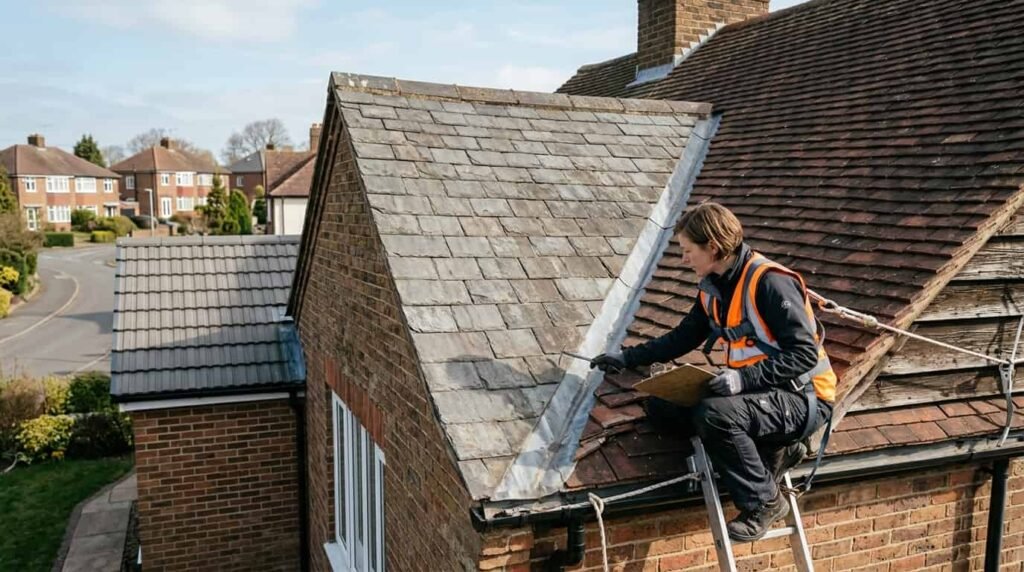
What Happens During a Roof Inspection?
A professional roofer may assess:
Roof coverings
Tiles or slates
Flashing
Ridge and verge areas
Valleys
Gutters and drainage
Roof structure
Loft space
Signs of water ingress
Ventilation
Previous repair areas
Overall condition
The purpose is to understand why the roof is failing, not simply identify the most obvious visible problem.
What About Building Regulations When Replacing a Roof?
If significant roof refurbishment is required, Building Regulations may apply.
NFRC’s homeowner guidance states that when replacing or renewing more than 50% of a roof, the work has requirements relating to insulation and notification.
This is another reason to discuss a substantial roof project with an experienced contractor before work begins.
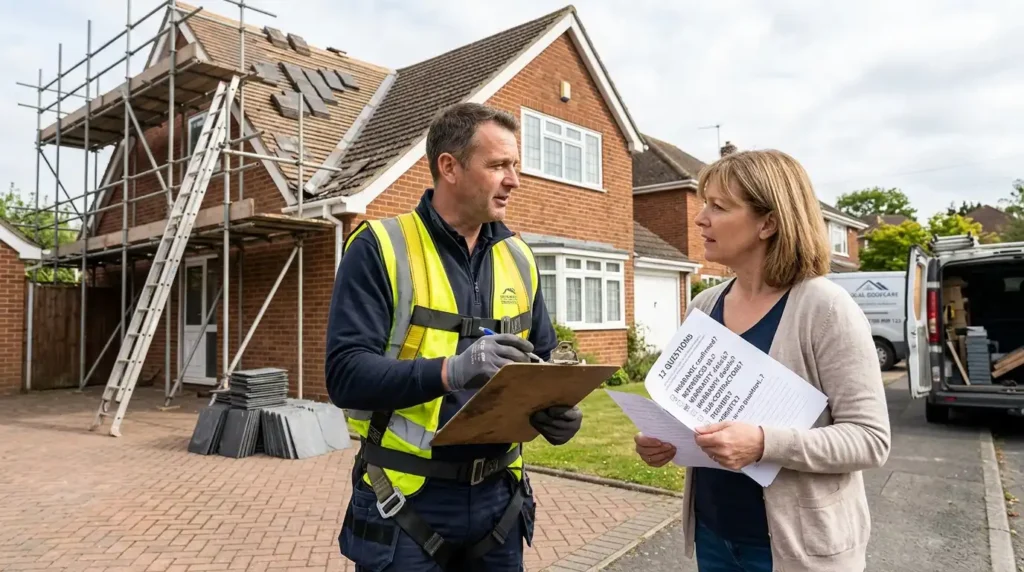
Should You Get More Than One Roofing Quote?
For larger roofing projects, getting multiple written quotations can help you compare:
Recommended materials
Scope of work
Labour
Guarantees
Timescale
Additional costs
Payment terms
NFRC advises homeowners to consider up to three roofing contractors and not automatically choose the cheapest quote.
A low quote isn’t necessarily the best value if important work has been excluded.
How Long Will Your Roof Last?
There is no universal expiry date for a roof.
A rough guide is:
Concrete tiles: 40–75 years
Clay tiles: 50–100+ years
Natural slate: 75–200 years
EPDM: 40–50+ years
GRP: around 25–30 years
But these figures are only useful as a starting point.
Installation quality, maintenance, weather exposure, ventilation, drainage and the condition of the underlying roof system can all affect actual lifespan.
If your roof is old but performing well, it may not need immediate replacement.
If it is relatively young but repeatedly leaking, damaged or deteriorating, it may need attention much sooner.
Roof Inspection and Repair in Basingstoke
If you’re concerned about the age or condition of your roof, Smart Roofing LTD can assess roofing problems and discuss suitable repair or replacement options.
Roofing services include:
Roof inspections
Roof replacement
Solar panel installation
For homeowners in Basingstoke, Lychpit and surrounding areas, getting a professional assessment can help you understand whether your roof needs a simple repair, ongoing maintenance or more extensive work.
Frequently Asked Questions
How long does a roof last in the UK?
It depends on the roofing material and other factors. Concrete tiles can typically last around 40–75 years, clay tiles 50–100+ years and natural slate around 75–200 years.
How often should a roof be replaced?
There is no fixed replacement date. A roof should generally be assessed based on its condition, material, repair history and remaining service life rather than age alone.
Is a 20-year-old roof old?
Not necessarily. Many roofing systems can last considerably longer than 20 years when properly installed and maintained.
Is a 50-year-old roof too old?
Not automatically. Some materials, particularly clay tiles and natural slate, can have much longer service lives. The roof’s current condition is more important than its age alone.
How long does a flat roof last?
It depends on the system. EPDM can last around 40–50+ years, while GRP is typically around 25–30 years. Installation quality and maintenance also affect performance.
Should I replace my roof before installing solar panels?
If your roof is approaching the end of its service life, it is sensible to have its condition assessed before installing solar panels. Otherwise, future roof replacement could require the panels to be removed and reinstalled.
Can roof maintenance extend its lifespan?
Regular inspection, keeping drainage clear and addressing defects promptly can help maintain a roof. However, maintenance cannot indefinitely extend a roof beyond the service life of its materials.
Does moss mean my roof needs replacing?
No. Moss alone doesn’t mean a roof needs replacement. NFRC says moss is generally only a concern when it blocks gutters, outlets or drainage points, and warns that aggressive removal methods can damage tiles.
Key Takeaway
How long a roof lasts depends on much more than its age.
A well-installed and maintained roof can provide many decades of service, while damage, poor workmanship, inadequate ventilation or drainage problems can shorten its useful life.
If you’re unsure whether your roof needs repair or replacement, don’t rely on age alone. Have its current condition assessed and make the decision based on the evidence.