Skip to content

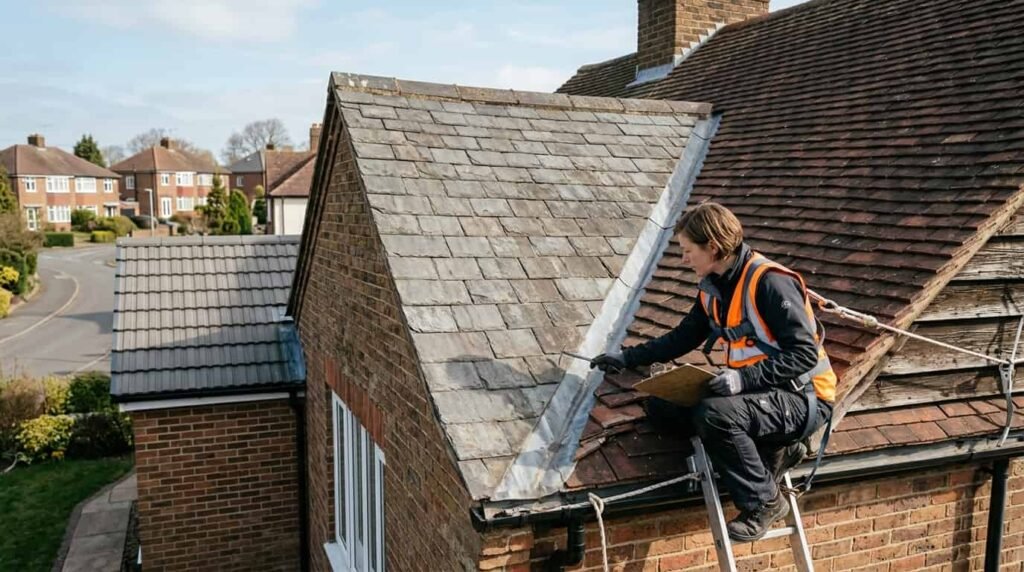
Your roof protects your home from rain, wind and changing weather throughout the year. But roofing problems don’t always start with a dramatic leak.
A slipped tile, damaged flashing, blocked gutter or small damp patch can be an early warning that your roof needs attention.
Recent UK roofing guidance highlights damaged or missing tiles, failed flashing, blocked gutters, damp loft areas, daylight and sagging as common warning signs.
Knowing what to look for can help you identify problems earlier and arrange repairs before a small issue develops into more extensive damage.
Here are 15 signs your roof may need repair.
1. Missing Roof Tiles
Missing tiles are one of the easiest roof problems to identify from ground level.
Tiles can become displaced or blown off during strong winds and storms, leaving part of the roof covering exposed.
Even if you cannot see water entering your home, a missing tile should be assessed because the underlying roof system may be exposed to rain.
What to do: Photograph the area from the ground if it is safe and arrange a professional inspection.
2. Cracked or Broken Tiles
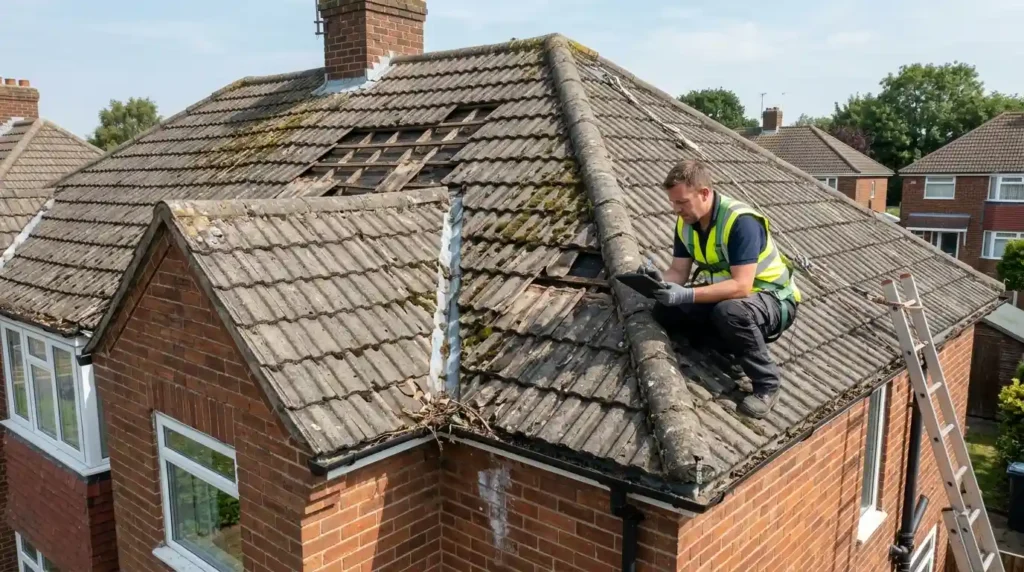
Roof tiles can crack because of age, weather exposure, impact or other damage.
A few damaged tiles may be relatively straightforward to replace, but widespread cracking can indicate that the roof covering is deteriorating.
Look for:
- Visible cracks
- Broken corners
- Damaged edges
- Pieces of tile in gutters
- Tile fragments around the property
Don’t climb onto the roof to inspect them yourself.
3. Slipped or Misaligned Tiles
Tiles that have moved out of their normal position can create gaps in the roof covering.
You may notice rows of tiles that no longer appear straight or individual tiles sitting lower or higher than the surrounding area.
Slipped tiles can sometimes be caused by damaged fixings, deteriorated mortar or storm damage.
One slipped tile doesn’t automatically mean you need a new roof. Localised damage can often be repaired.
4. Water Stains on the Ceiling
Brown, yellow or discoloured marks on ceilings can be a sign of water ingress.
Pay particular attention to stains that:
- Appear after rainfall
- Become larger over time
- Reappear after being painted
- Are accompanied by damp smells
- Occur near roof-level rooms
The visible stain isn’t necessarily directly underneath the roof problem because water can travel along roof structures before entering the room.
5. Damp or Wet Loft Insulation
If you can safely access your loft, check for damp or unusually wet insulation.
Water entering through the roof can soak insulation and reduce its effectiveness.
Wet insulation may also indicate that a leak has been present for longer than you realised.
If you find damp insulation, look for other signs such as:
- Wet roof timbers
- Dark staining
- Mould
- Water marks
- Dripping
- Musty smells
6. Daylight Visible Through the Roof
If you can see daylight through areas of the roof where there shouldn’t be any, there may be a gap in the roof covering or underlying system.
This can occur because of:
- Missing tiles
- Damaged tiles
- Gaps around roof components
- Damaged underlay
- Deteriorated roof structure
Daylight visible from the loft should be investigated rather than ignored.
7. A Sagging Roofline
A roof should generally have a consistent shape.
If part of the roof appears to dip, sag or become uneven, it could indicate a problem with the roof structure, timber movement, water damage or other deterioration.
A sagging roofline deserves prompt professional attention because it may indicate a more serious issue than surface-level tile damage.
8. Damaged or Loose Flashing
Flashing helps protect vulnerable junctions where the roof meets structures such as:
- Chimneys
- Walls
- Dormers
- Roof valleys
- Roof windows
Cracked, lifted, displaced or deteriorated flashing can allow water to enter.
Sometimes water from failed flashing can travel down the inside of a wall or chimney before becoming visible.
9. Blocked or Overflowing Gutters
Gutters are part of the property’s rainwater management system.
When gutters become blocked, water can overflow and reach areas where it shouldn’t.
Look for:
- Water overflowing during rain
- Plants growing from gutters
- Leaves and debris
- Sagging gutter sections
- Water staining around fascia boards
- Loose downpipes
Blocked gutters don’t necessarily mean the roof itself has failed, but they can contribute to moisture problems around the roof edge.
10. Pieces of Roofing Material in the Gutters
Finding small pieces of tile, slate, mortar or other roofing material in your gutters can indicate deterioration above.
This is particularly worth checking after strong winds.
A small amount of debris doesn’t automatically mean your entire roof needs replacing, but recurring debris should be investigated.
11. A Musty Smell in the Loft
Not every roof leak produces visible dripping water.
A persistent musty smell in the loft can indicate moisture, damp insulation or poor ventilation.
Roof-related moisture and condensation can sometimes produce similar symptoms, so identifying the actual cause is important before deciding what repair is required.
A professional inspection can help distinguish between water ingress and condensation-related problems.
12. Mould or Damp Around the Roof Space
Mould or damp patches around roof timbers, underlay or insulation can indicate a moisture problem.
Possible causes include:
- Roof leaks
- Condensation
- Poor ventilation
- Damaged flashing
- Defective roof coverings
Don’t assume that every damp patch means the roof needs replacing.
The cause needs to be identified first.
13. Flat Roof Cracks, Blisters or Ponding Water
Flat roofs have different warning signs from pitched tiled roofs.
If you have a flat roof over a:
- Garage
- Extension
- Porch
- Dormer
- Outbuilding
look for visible signs such as:
- Cracks
- Splits
- Blisters
- Lifting edges
- Damaged seams
- Standing water
- Deteriorated surfaces
Persistent ponding water can indicate drainage or roof-design issues and should be assessed.
14. Storm Damage
Strong winds and severe weather can expose weaknesses in a roof.
After a storm, safely check from ground level for:
- Missing tiles
- Slipped tiles
- Damaged ridge tiles
- Roof debris
- Loose gutters
- Damaged flashing
- Visible roof openings
Recent UK reporting highlights storm-related roof damage as an ongoing concern, with the Association of British Insurers reporting £244 million in home storm-damage claims during 2025.
If you suspect significant storm damage, don’t climb onto the roof yourself.
15. Your Roof Needs Frequent Repairs
One repair doesn’t necessarily mean you need a new roof.
But if you’re repeatedly calling a roofer for different leaks, damaged areas or deteriorating materials, it may be time to assess the roof as a whole.
Frequent repairs can indicate:
- Ageing roofing materials
- Widespread deterioration
- Structural problems
- Failed underlay
- Repeated water ingress
- A roof approaching the end of its useful life
This doesn’t automatically mean replacement is necessary. A professional inspection should determine whether continued repairs remain sensible.
Which Roof Problems Need Urgent Attention?
Not every roofing problem is an emergency.
However, arrange professional help promptly if you notice:
- Active water entering your home
- A sagging ceiling
- A sagging roofline
- Widespread storm damage
- Significant missing roof coverings
- Water near electrical fittings
- Major structural movement
- A large exposed section of roof
An active leak can cause secondary damage to ceilings, insulation, timber and internal finishes if it is allowed to continue.
If there is immediate danger, prioritise the safety of people inside the property and avoid entering hazardous areas.
Does One Damaged Tile Mean You Need a New Roof?
No.
A single damaged or slipped tile is usually not enough evidence to conclude that the entire roof needs replacing.
Localised problems may be repairable.
A replacement becomes more worth considering when there is:
- Widespread damage
- Repeated leaks
- Extensive deterioration
- Failed roof structure
- Multiple areas requiring repair
- An ageing roof with ongoing problems
The condition of the whole roof should be considered before making a replacement decision.
Does Moss Mean You Need a New Roof?
Not necessarily.
Moss can grow on roofs, particularly in shaded or damp areas, without meaning the roof has failed.
Heavy moss growth can trap moisture and contribute to deterioration, but moss alone shouldn’t be used as a reason to recommend complete roof replacement.
The underlying condition of the roof covering, structure and other components matters much more.
How Can You Check Your Roof Safely?
You don’t need to climb onto your roof to look for many warning signs.
From the ground
Look for:
- Missing tiles
- Cracked tiles
- Slipped tiles
- Sagging areas
- Damaged flashing
- Blocked gutters
- Excessive debris
- Obvious changes after storms
From inside
If your loft is safely accessible, look for:
- Daylight
- Damp timbers
- Wet insulation
- Water stains
- Mould
- Musty smells
Never put yourself at risk by climbing onto a roof.
For difficult-to-see areas, a professional inspection can provide a much safer assessment.
How Often Should You Check Your Roof?
A visual roof check can be useful around twice a year, such as in spring and autumn, as well as after severe weather.
You don’t need to physically climb onto the roof.
Instead, check visible areas from ground level and inspect the loft where it is safe to do so.
Regular checks can help identify small problems before they develop into more extensive repairs. Recent UK roofing guidance similarly recommends periodic visual checks and additional checks after storms or heavy rain.
What Should You Do If You Find a Roof Problem?
Don’t immediately assume you need a complete new roof.
Follow these steps:
Step 1: Record the problem
Take photographs from a safe location.
Step 2: Check for internal signs
Look for damp patches, stains or wet insulation.
Step 3: Don’t climb onto the roof
Leave roof-level inspection to someone equipped and trained to work at height.
Step 4: Arrange a professional inspection
A roofer can assess the condition and identify the likely cause.
Step 5: Ask whether repair or replacement is appropriate
A good contractor should explain the reasoning behind their recommendation.
Step 6: Get a clear quotation
Make sure you understand what work and materials are included.
Roof Repair vs Roof Replacement
One of the most important questions is whether the roof needs a repair or a complete replacement.
Repair may be suitable when:
- Damage is localised
- The roof structure is sound
- Only a small number of tiles are damaged
- One flashing section has failed
- There is a single identifiable leak
Replacement may need consideration when:
- Damage is widespread
- Repairs are repeatedly required
- Multiple areas are leaking
- Roof coverings are extensively deteriorated
- Structural components have failed
- The roof has reached the end of its useful life
A professional assessment is the best way to make this decision.
Don’t Ignore Small Roofing Problems
A small roofing problem may appear harmless when the weather is dry.
But rain, wind and freezing temperatures can make existing weaknesses worse.
For example:
Damaged tile → water ingress → damp insulation → timber damage → internal repairs
The earlier the underlying problem is identified, the more options you may have for dealing with it.
The goal isn’t to replace a roof unnecessarily. It’s to identify problems early and repair them appropriately.
If you’ve noticed a leak, damaged tile, sagging area or another warning sign, a professional inspection can help determine what is causing the problem and whether repair or replacement is appropriate.
Frequently Asked Questions
How do I know if my roof needs repair?
Common warning signs include missing or cracked tiles, water stains, damp loft insulation, damaged flashing, blocked gutters, daylight in the loft, sagging areas and recurring leaks.
What is the biggest sign of a roof leak?
Active water entering the property is one of the clearest signs. Other warning signs include damp patches, ceiling stains, wet insulation, mould and musty smells.
Does one missing tile mean I need a new roof?
No. A single missing or damaged tile can often be a localised repair. Replacement should only be considered after assessing the condition of the wider roof.
Does moss mean my roof needs replacing?
No. Moss can occur on otherwise sound roofs. Heavy growth should be addressed appropriately, but moss alone isn’t a reason to replace an entire roof.
How often should I inspect my roof?
A visual check around twice a year, plus an additional check after severe weather, can help identify visible problems early. You should inspect from safe locations rather than climbing onto the roof.
What should I do if I find water coming through my ceiling?
Protect belongings, keep away from unsafe areas and electrical hazards, and arrange professional assistance. Don’t climb onto the roof yourself to find the source.
How do I know whether I need roof repair or replacement?
Localised damage on an otherwise sound roof may be repairable. Widespread deterioration, repeated failures or structural problems may make replacement more appropriate. A professional inspection can help establish the difference.