Skip to content

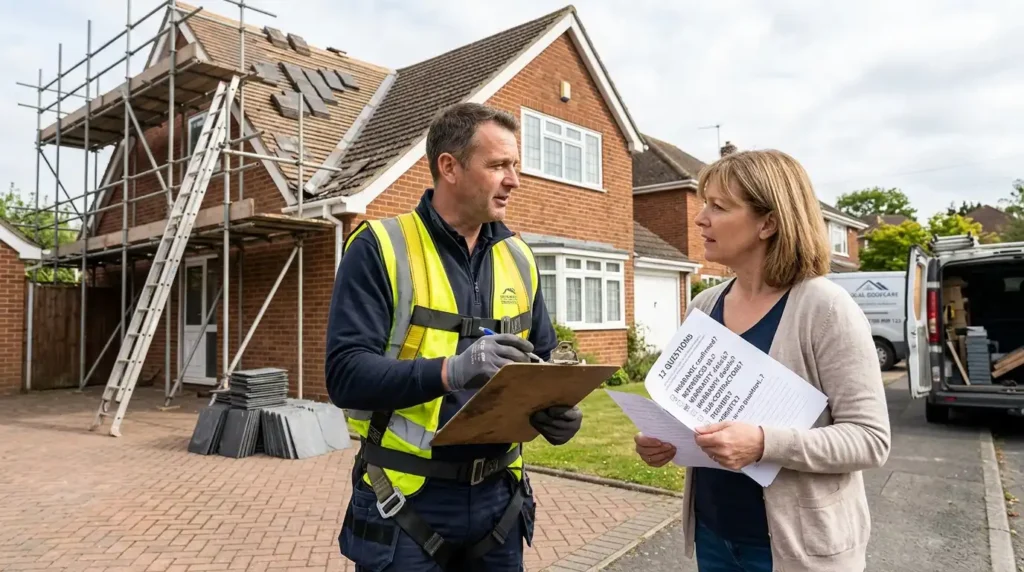
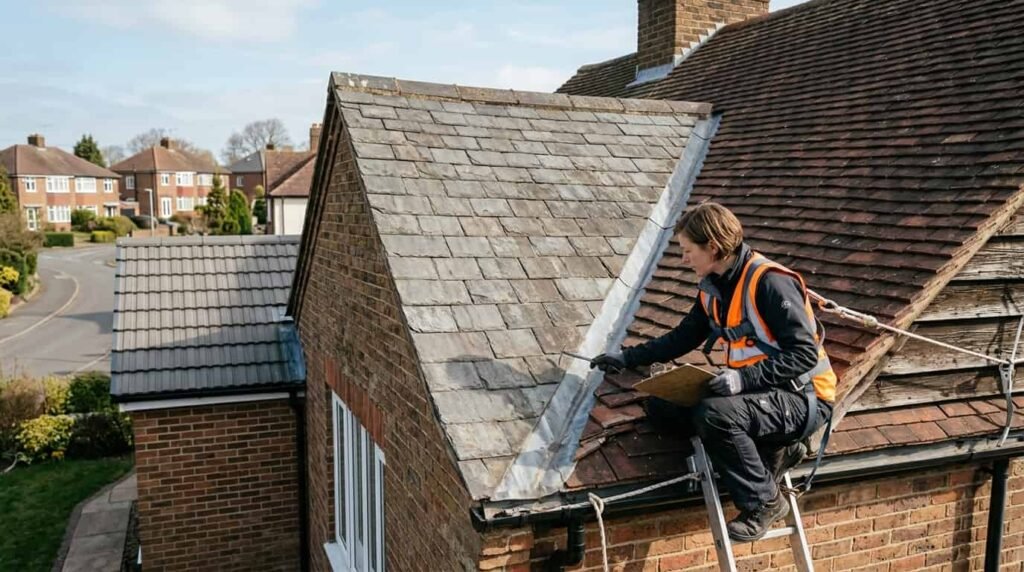
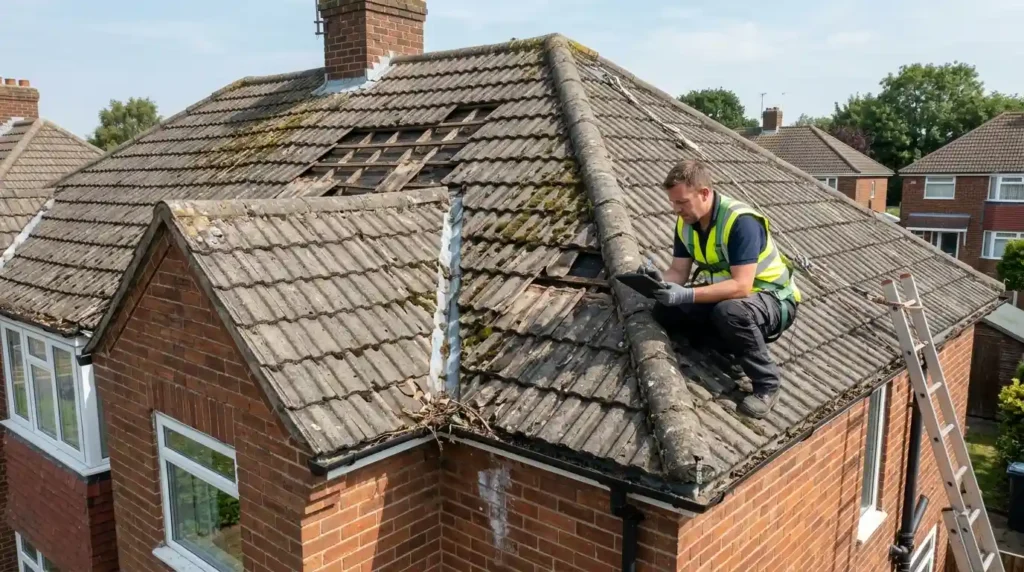
Choosing a roofing contractor is an important decision. Whether you need a small repair, a complete roof replacement or a new roof for an extension, the contractor you choose can have a major effect on the quality, cost and longevity of the work.
It can be tempting to choose the cheapest quotation, but price should not be the only factor.
The National Federation of Roofing Contractors (NFRC) recommends getting up to three roofing contractors to assess the work, comparing written quotations and considering the quality of advice and confidence you have in each contractor rather than automatically choosing the cheapest option.
Here are 12 important questions to ask before hiring a roofer.
1. How Much Experience Do You Have With This Type of Roof?
Not every roofing project is the same.
A contractor experienced in repairing pitched tiled roofs may have different expertise from one specialising in:
- Flat roofing
- EPDM
- GRP/fibreglass
- Slate roofing
- New roof installations
- Chimney repairs
- Commercial roofing
- Heritage properties
Ask the roofer whether they regularly work on the type of roof you have.
You can also ask for examples of similar projects they have completed.
TrustMark recommends checking how long a tradesperson has been trading, verifying qualifications and asking for references where appropriate.
2. Are You Properly Insured?
This is one of the most important questions to ask.
A professional roofing contractor should have appropriate insurance for the work they carry out.
Ask:
- What insurance do you have?
- Is public liability insurance included?
- Do you have employers’ liability insurance where applicable?
- Can you provide evidence of insurance?
NFRC members, for example, must provide evidence of adequate employers’ and public liability insurance as part of their membership requirements.
Don’t simply take someone’s word for it if you’re unsure. Ask for the relevant documentation.
3. Are You a Member of a Roofing Trade Association?
Ask whether the contractor belongs to a recognised trade organisation.
For example, the National Federation of Roofing Contractors (NFRC) has a membership process involving vetting, inspections and requirements relating to workmanship, insurance, health and safety and relevant standards.
Membership isn’t the only thing you should consider, but independently verified trade credentials can provide another useful way to assess a contractor.
If a company claims to be a member of a particular organisation, check the membership directly rather than relying solely on a logo displayed on a website.
4. Can You Provide References or Examples of Previous Work?
A good roofing contractor should be able to discuss previous projects.
Ask for:
- Examples of similar roofing work
- Recent project photographs
- Customer references where appropriate
- Details of relevant experience
TrustMark recommends asking for references and contacting previous customers where appropriate.
Look for projects similar to yours rather than simply looking at a large collection of unrelated photographs.
5. Will You Inspect the Roof Before Giving Me a Quote?
A professional quotation should be based on an understanding of the actual property and roofing problem.
Depending on the project, the contractor may need to assess:
- Roof covering
- Flashing
- Valleys
- Chimneys
- Gutters
- Roof structure
- Existing membrane
- Roof access
- Flat roof condition
- Visible signs of water damage
Be cautious about accepting a detailed roofing price based solely on a brief phone conversation or a distant visual assessment.
A proper inspection can help identify what actually needs to be done.
6. Can You Give Me a Written Quote?
Yes should be the expected answer.
Get the proposed work and price in writing.
NFRC advises homeowners to ensure the selected quote or estimate is provided in writing, except potentially for small emergency repairs.
Citizens Advice also recommends getting written quotes from at least three contractors and making sure the quote clearly explains the work, materials, price and other relevant terms.
A detailed roofing quote should ideally explain:
- Total price
- Labour
- Materials
- Preparation
- Removal of existing materials
- Waste disposal
- Scaffolding or access
- Expected timeframe
- VAT where applicable
- Guarantees
- Potential additional costs
7. What Exactly Is Included in the Quote?
Never assume that two quotations cover exactly the same work.
For example, one roofer might include:
- Scaffolding
- Old tile removal
- Waste disposal
- New membrane
- New battens
- Leadwork
- Ridge tiles
- Guttering
while another quotation might exclude some of these items.
Ask the contractor to explain exactly what you’re paying for.
Citizens Advice recommends checking that a quote includes a breakdown of the work and materials, the total price, VAT information where applicable and circumstances in which the price could change.
8. What Roofing Materials Do You Recommend and Why?
Don’t be afraid to ask why a particular material has been recommended.
Depending on your roof, options might include:
- Concrete tiles
- Clay tiles
- Slate
- EPDM
- GRP/fibreglass
- Felt
- Other roofing systems
Ask:
“Why is this material suitable for my roof?”
A good contractor should be able to explain the advantages, limitations, expected maintenance and suitability of the material rather than simply giving you a product name.
For example, if you’re replacing a flat roof, you may want to compare EPDM, GRP and felt based on your budget, roof design and intended lifespan.
9. How Long Will the Work Take?
Ask for an estimated timeframe before the project starts.
The actual duration can depend on:
- Roof size
- Roof complexity
- Weather
- Material availability
- Access
- Structural repairs
- The amount of existing roofing that needs removing
Ask:
- When can you start?
- How many days should the work take?
- What could delay the project?
- What happens if bad weather affects the schedule?
TrustMark recommends discussing timescales with the tradesperson before work begins.
10. What Guarantee Do You Provide?
Ask exactly what guarantee comes with the work.
You should understand:
- What is covered?
- How long does the guarantee last?
- Does it cover workmanship?
- Are materials covered separately?
- Who provides the guarantee?
- What happens if the contractor stops trading?
NFRC recommends asking about guarantees for new or refurbishment work and highlights the potential benefit of an Insurance Backed Guarantee (IBG) that remains independent of the contractor’s own guarantee.
Don’t accept a vague statement such as “the work is guaranteed” without asking what that actually means.
11. What Happens If You Find Hidden Damage?
Roofing projects can sometimes reveal problems that weren’t visible before the existing covering was removed.
For example, a roofer may discover:
- Rotten timber
- Damaged rafters
- Defective battens
- Deteriorated roof decking
- Unexpected water damage
Ask the contractor:
“What happens if you discover additional damage after starting?”
Ideally, the quotation or contract should explain how additional work will be handled.
NFRC specifically notes that refurbishment estimates can change after the main roof covering is removed and the underlying structure becomes visible.
You should understand who needs to approve additional work and how any extra cost will be calculated.
12. What Are Your Payment Terms?
Discuss payment terms before work starts.
Ask:
- Is a deposit required?
- How much is the deposit?
- When are further payments due?
- Is the final payment made after completion?
- What payment methods are accepted?
NFRC advises homeowners to agree payment terms before work begins and to be cautious about large upfront payments.
Be particularly careful if a contractor pressures you into making a large payment immediately.
How Many Roofing Quotes Should You Get?
For most planned roofing work, getting at least three written quotes is a sensible approach.
This gives you an opportunity to compare:
- Price
- Materials
- Scope of work
- Guarantees
- Timescale
- Contractor experience
- Payment terms
Both NFRC and TrustMark recommend obtaining multiple quotes rather than immediately accepting the first one.
However, don’t compare the final price alone.
A £7,000 quote and a £9,000 quote may look very different until you discover that the second quote includes additional work, better materials, scaffolding and waste removal.
Should You Always Choose the Cheapest Roofer?
No.
The cheapest quotation may be the right choice in some situations, but price alone doesn’t tell you whether the work is suitable.
NFRC specifically advises homeowners not to automatically choose the cheapest option and instead consider the quality of advice and their confidence in the contractor.
Look at the complete package:
Price + workmanship + materials + experience + insurance + guarantee + communication.
What Should a Roofing Quote Include?
A detailed roofing quote should clearly explain the proposed work.
Look for:
Scope of Work
What exactly will be repaired, replaced or installed?
Materials
What products and roofing materials will be used?
Labour
Is labour included in the total price?
Access
Does the price include scaffolding or other access requirements?
Waste
Who removes the old roofing materials and debris?
VAT
Is VAT included in the quoted price where applicable?
Timescale
How long is the work expected to take?
Guarantee
What guarantee is provided and what does it cover?
Additional Work
What happens if unexpected damage is discovered?
Citizens Advice recommends checking that quotes include a fixed total price, breakdown of work and materials, validity period, VAT information and circumstances in which the price can change.
What Are Red Flags When Choosing a Roofer?
Be cautious if a contractor:
- Refuses to provide a written quotation
- Pressures you to decide immediately
- Demands an unusually large upfront payment
- Cannot explain what is included in the price
- Avoids questions about insurance
- Gives vague answers about guarantees
- Has no clear business details
- Offers a price dramatically lower than comparable quotes without explanation
- Claims memberships or credentials you cannot verify
- Wants payment in unusual circumstances without proper documentation
A low price isn’t automatically a warning sign, but a quotation that is substantially cheaper than others deserves closer examination.
Citizens Advice specifically warns that a very low price may indicate differences in scope, lack of appropriate skills or other concerns.
How to Check a Roofing Company Before Hiring Them
Before agreeing to the work, consider checking:
Business Details
Confirm the company’s trading name and contact details.
Insurance
Ask for evidence of appropriate insurance.
Trade Memberships
Verify claimed memberships directly with the relevant organisation.
References
Ask for examples of comparable projects or references.
Reviews
Look at recent customer feedback, but don’t rely on reviews alone.
Written Quote
Make sure the quotation clearly explains the work.
Guarantee
Understand exactly what is covered.
Contract
For larger projects, make sure you have clear written terms.
TrustMark’s homeowner guidance recommends checking qualifications, references, insurance, trading history, quotes, guarantees and aftercare before choosing a tradesperson.
What About Building Regulations?
Some roofing work can involve Building Regulations requirements.
For example, NFRC notes that in England and Wales, where 50% or more of a roof’s area is being replaced, certain thermal requirements can apply and homeowners should ensure the appropriate Building Control or competent-person arrangements are followed.
Ask your roofing contractor:
“Does this project require Building Regulations notification or certification?”
The answer can depend on the exact scope and location of the work.
For significant roof replacement work, make sure these requirements are understood before the project begins.
Questions to Ask Before You Sign a Roofing Contract
Before accepting a quotation, you should be able to answer these questions:
- Who exactly is carrying out the work?
- Do they have appropriate insurance?
- Do they have experience with your type of roof?
- What exactly needs to be repaired or replaced?
- Which materials will be used?
- What is included in the price?
- Is scaffolding included?
- Is waste removal included?
- How long will the project take?
- What guarantee is provided?
- How will unexpected damage be handled?
- What are the payment terms?
If you cannot get clear answers, consider getting another quotation.
How to Compare Roofing Contractors
A simple comparison table can make your decision easier.
| Factor | Contractor A | Contractor B | Contractor C |
|---|---|---|---|
| Total price | |||
| Materials | |||
| Labour included | |||
| Scaffolding | |||
| Waste removal | |||
| Estimated timeframe | |||
| Insurance verified | |||
| Guarantee | |||
| Relevant experience | |||
| Trade membership | |||
| Payment terms |
This helps prevent you from choosing a contractor based only on the cheapest headline price.
When Should You Get a Roofing Quote?
Don’t wait until a small roofing problem becomes a major one.
Consider getting professional advice if you notice:
- Water stains
- Missing tiles
- Cracked tiles
- Persistent leaks
- Sagging areas
- Damaged flashing
- Blocked or damaged gutters
- Storm damage
- Deteriorated flat roofing
- Repeated repairs
Early assessment can help you understand the problem and determine whether a small repair or larger project is required.
Choosing a Roofer in Basingstoke
If you’re looking for roofing services in Basingstoke, Lychpit and surrounding areas, Smart Roofing LTD provides a range of roofing services for residential and commercial properties.
Services include:
- Roof repairs
- New roof installation
- Roof replacement
- Flat roofing
- Roof inspections
- Emergency roof repairs
- Gutter and fascia services
- Chimney repairs
- Solar panel installation
Whether you need a small repair or are considering a complete new roof, getting a clear assessment and detailed quotation is an important first step.
Frequently Asked Questions
What should I ask a roofing contractor before hiring them?
Ask about their experience, insurance, trade memberships, previous work, recommended materials, written quotation, timeframe, guarantee, payment terms and how unexpected damage will be handled.
How many roofing quotes should I get?
For planned roofing work, getting at least three written quotes is generally recommended. This allows you to compare the scope, price, materials, guarantees and timescales.
Should I choose the cheapest roofing quote?
Not automatically. Compare the complete scope of work and the contractor’s experience, insurance, materials, guarantee and communication as well as price.
What should a roofing quote include?
A detailed quote should explain the work, materials, total price, labour, access requirements, waste removal, VAT where applicable, expected timeframe and circumstances that could cause additional costs.
Should a roofer provide a guarantee?
Ask what guarantee is offered, what it covers and how long it lasts. For major roofing work, you can also ask whether an Insurance Backed Guarantee is available.
How can I check if a roofer is insured?
Ask the contractor for evidence of the relevant insurance before agreeing to the work. Don’t rely solely on a verbal statement.
Is a roofing trade association membership important?
It can be a useful additional trust signal. Organisations such as NFRC have membership requirements involving vetting, insurance, workmanship and compliance. However, you should still assess the contractor’s quotation and suitability for your specific project.
What should I do if a roofer discovers hidden damage?
Ask the contractor to explain the problem and provide the proposed additional work and cost before proceeding where possible. Your original quotation should make clear how unexpected work will be handled. NFRC notes that refurbishment estimates can change once existing roof coverings are removed and underlying problems become visible.