Skip to content


A roof leak during a storm can be stressful, especially when heavy rain and strong winds make it unsafe to investigate the roof yourself.
The most important thing is not to climb onto the roof while the weather is dangerous. Your first priority should be keeping people safe and limiting damage inside the property. The British Red Cross advises staying indoors during a storm and not attempting repairs while the storm is ongoing.
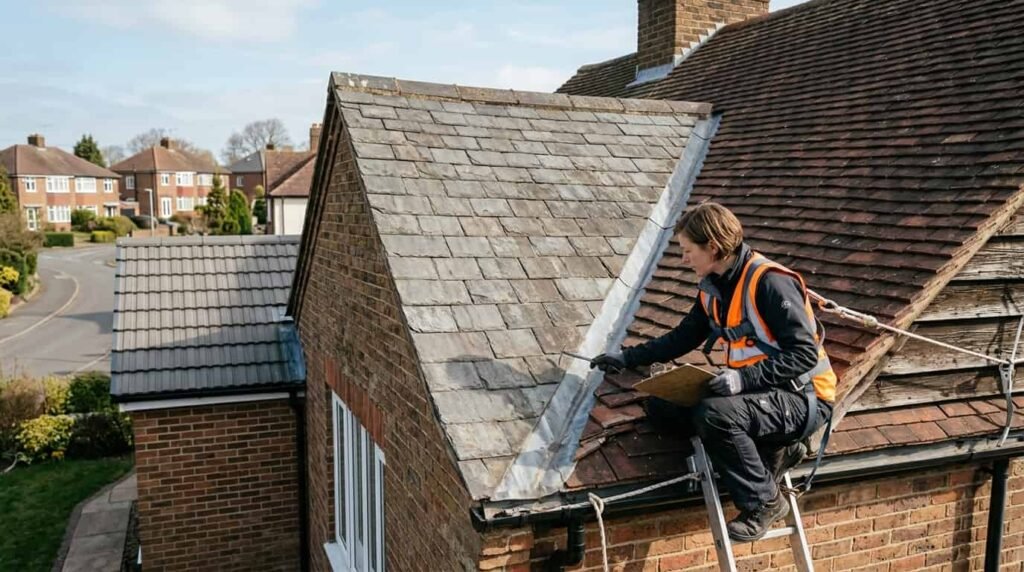
Once the weather has passed and it is safe to do so, a professional roofer can inspect the damage and determine what repairs are required.
Is a Leaking Roof During a Storm an Emergency?
It can be.
A roof leak should be treated as urgent when:
- Water is actively entering your home
- Water is near electrical fittings
- The ceiling is sagging or bulging
- Roof tiles or slates have been blown off
- Part of the roof is exposed
- A chimney or roof structure appears unstable
- Heavy water is entering the loft or living space
- Storm damage could become worse with further rain
An active leak, exposed roof structure or serious storm damage can allow water to enter quickly and cause further damage to ceilings, insulation, timber and internal areas.
What Should You Do First If Your Roof Starts Leaking?
1. Stay Safe
If the storm is still happening, do not climb onto the roof.
Strong winds, rain and lightning can make ladders and roof surfaces extremely dangerous. The British Red Cross specifically advises waiting until the storm has passed before attempting repairs.
Keep away from areas where loose roof materials, branches or other objects could fall.
2. Move Furniture and Belongings
If water is entering a room, move furniture, electronics and other valuable belongings away from the affected area.
If you cannot safely move something, cover it to reduce exposure to water.
3. Catch the Water
Place a bucket, container or other suitable item underneath active dripping.
Use towels or cloths around the container to help control splashing and protect the surrounding floor.
The goal at this stage is damage control, not attempting a permanent roof repair.
4. Watch for Electrical Hazards
Water and electricity can be extremely dangerous.
If water is reaching:
- Light fittings
- Electrical sockets
- Wiring
- Appliances
- The consumer unit
keep away from the affected area.|
Only switch off electricity if it can be done safely. If you’re unsure, don’t put yourself at risk.
5. Take Photos and Videos
If it is safe, document the damage.
Take photographs of:
- Water stains
- Ceiling damage
- Damaged plaster
- Missing or broken tiles visible from the ground
- Water entering the property
- Damaged roof areas after the storm
Photographs can help your roofer understand the problem and may also be useful if you need to make an insurance claim. The Association of British Insurers recommends documenting damage and keeping itemised invoices for emergency work.
Don’t Climb Onto Your Roof During a Storm
This is one of the most important things to remember.
A wet roof can become extremely slippery, while high winds can make ladders unstable and dislodge roofing materials.
Even after the storm has passed, damaged tiles, chimneys, walls and trees may remain hazardous.
The safest approach is to inspect visible damage from ground level and arrange a professional inspection.
The British Red Cross advises against attempting repairs while a storm is ongoing.
What Causes Roof Leaks During Storms?
Storms can expose weaknesses that weren’t obvious during normal weather.
Common causes include:
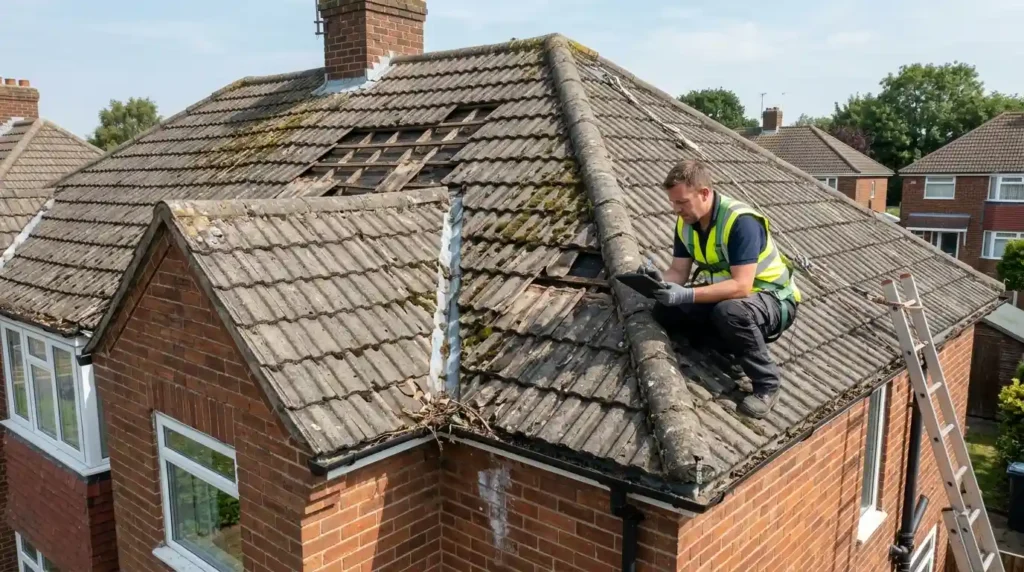
Broken or Missing Tiles
Strong winds can move, crack or remove roof tiles and slates.
Once the roof covering is damaged, rain can reach the underlying layers.
Damaged Flashing
Flashing around chimneys, roof junctions and other areas can deteriorate or become displaced.
Blocked or Damaged Gutters
Heavy rainfall can overwhelm gutters, particularly if they are already blocked with leaves or debris.
Water can overflow towards vulnerable roof edges.
Roof Valleys
Roof valleys collect and direct large amounts of rainwater. Damage or blockages can cause water to enter the roof.
Chimney Damage
Storm conditions can expose weaknesses around chimney stacks, flashing and mortar joints.
Flat Roof Damage
Heavy rain, wind and deteriorated membranes can contribute to leaks on flat roofs.
Roof Penetrations
Skylights, vents, pipes and other roof penetrations can become vulnerable when seals or surrounding materials deteriorate.
How Can You Find Where the Roof Is Leaking?
The point where water appears inside your home isn’t necessarily where the roof is damaged.
Water can travel along roof timbers, membranes and other surfaces before entering the room below.
If it is safe, you can look for:
- Brown or yellow ceiling stains
- Damp patches
- Wet insulation
- Damp roof timbers
- Visible dripping
- Water trails
- Mould or damp smells
If you have safe access to your loft, use a torch and avoid touching electrical components.
You should not climb onto the roof to find the source yourself.
A professional roofer can inspect the roof externally and investigate the likely entry point.
What If a Roof Tile Has Blown Off?
If you can see a missing tile after a storm, don’t immediately climb onto the roof to replace it.
The surrounding roof may also have been damaged.
A missing tile can expose the underlying roof structure to wind-driven rain, so it should be assessed promptly.
From ground level, look for:
- Missing tiles
- Slipped tiles
- Cracked tiles
- Damaged ridge tiles
- Loose roof materials
- Visible gaps in the roof covering
Then contact a professional roofer for an inspection and repair.
Can You Temporarily Stop a Roof Leak?
Temporary measures may help limit further damage while you wait for professional assistance.
However, they should only be attempted when they can be done safely.
The Association of British Insurers recommends arranging temporary emergency repairs where necessary to prevent further damage, while informing your insurer and keeping receipts.
For homeowners, the safest immediate actions are usually inside the property:
- Catch the water
- Move belongings
- Protect floors
- Photograph the damage
- Keep people away from dangerous areas
- Contact your insurer if appropriate
- Arrange professional roofing assistance
Do not attempt to permanently repair a roof during dangerous weather.
Should You Put a Tarp on a Damaged Roof?
A temporary waterproof covering can sometimes be used as an emergency measure, but installing one on a roof can be dangerous.
If the roof is steep, wet, unstable or difficult to access, don’t attempt it yourself.
A poorly secured covering can also become dangerous in strong winds.
If emergency weatherproofing is necessary, it is better to have a qualified professional assess the situation.
Should You Contact Your Home Insurance Company?
If your roof has suffered storm damage, contact your insurer as soon as reasonably possible.
Insurance coverage depends on your individual policy and circumstances.
The Association of British Insurers recommends contacting your property insurer promptly after storm damage. It also advises checking whether your policy includes emergency assistance and keeping receipts for necessary temporary repairs.
MoneyHelper also notes that buildings insurance may cover storm damage, but exclusions can apply, particularly where damage is considered related to wear and tear or inadequate maintenance.
Before carrying out major repairs, check what your insurer requires.
What Evidence Should You Keep for an Insurance Claim?
If storm damage is involved, keep records of what happened.
Useful evidence can include:
- Photos of the damage
- Videos where appropriate
- Date and approximate time of the storm
- Photos of missing or damaged tiles
- Photos of internal water damage
- Roofing quotations
- Emergency repair invoices
- Communication with your insurer
- Professional inspection reports
Don’t throw away damaged materials unnecessarily before speaking with your insurer, unless they create a safety hazard. The ABI advises homeowners to keep damaged items where possible and follow their insurer’s instructions.
How Do You Know If a Roof Leak Is an Emergency?
A roof leak deserves urgent attention if:
Water Is Coming Through the Ceiling
Active water ingress can cause increasing internal damage.
Water Is Near Electricity
This creates a potentially serious electrical hazard.
The Ceiling Is Bulging
A bulging ceiling can indicate trapped water and should not be ignored.
Tiles Have Been Blown Off
An exposed section of roof can allow more rain into the property.
The Roof Structure Looks Damaged
Sagging or movement may indicate a more serious problem.
A Chimney Appears Unstable
Keep away from the area and seek professional assistance.
The Leak Is Getting Worse
Increasing water ingress during continued rainfall should be dealt with promptly.
Recent UK roofing guidance similarly identifies active leaks, exposed roof structures and storm-damaged coverings as situations requiring urgent attention.
What Should You Do If the Storm Has Stopped but Your Roof Is Leaking?
Once the weather has passed:
- Check the property from a safe location.
- Photograph visible damage.
- Check for internal water damage.
- Avoid climbing onto the roof.
- Contact your insurer if storm damage may be covered.
- Arrange a professional roof inspection.
- Get a clear quotation for permanent repairs.
- Monitor the affected area until the repair is completed.
Don’t assume the leak has disappeared just because the rain has stopped.
A small opening in the roof can allow water to enter again during the next period of bad weather.
Can a Small Roof Leak Cause Serious Damage?
Yes.
A small leak can gradually affect:
- Roof timbers
- Insulation
- Plasterboard
- Ceilings
- Paintwork
- Internal furnishings
- Electrical components
A leak may also remain hidden for some time before becoming obvious inside the property.
This is why even a small recurring leak should be investigated rather than simply covered up.
Should You Repair a Storm-Damaged Roof or Replace It?
Storm damage doesn’t automatically mean you need a new roof.
A professional inspection may find that only a limited area requires repair.
Repair may be appropriate when:
- Only a few tiles are damaged
- Flashing has become displaced
- A small section has been affected
- The rest of the roof remains in good condition
Replacement may be considered when:
- Damage is widespread
- The roof was already severely deteriorated
- Multiple areas have failed
- Structural damage is present
- The roof is approaching the end of its useful life
- Repairs would no longer be cost-effective
The correct decision depends on the condition of the entire roof rather than the storm damage alone.
How Can You Reduce the Risk of Storm Roof Damage?
You cannot prevent every type of storm damage, but regular maintenance can reduce the risk of avoidable problems.
Before severe weather:
- Check for visibly damaged tiles
- Keep gutters clear
- Have loose roofing materials repaired
- Check visible flashing
- Arrange professional roof inspections where necessary
- Secure loose outdoor items
- Monitor official weather warnings
The Association of British Insurers specifically recommends maintaining buildings and addressing issues such as loose roof tiles before storms.
The British Red Cross also recommends checking for loose or cracked roof tiles and keeping gutters clear as part of storm preparation.
Emergency Roof Repairs in Basingstoke
Smart Roofing LTD provides roofing services for homeowners and properties in Basingstoke, Lychpit and surrounding areas.
Our roofing services include:
- Emergency roof repairs
- Storm damage repairs
- Roof leak repairs
- Broken and missing tile replacement
- Roof inspections
- Flat roof repairs
- New roof installation
- Roof replacement
- Gutter and fascia repairs
- Chimney repairs
If your roof has been damaged by heavy rain or strong winds, the priority is to keep your household safe, limit further internal damage and arrange a professional assessment.
Frequently Asked Questions
What should I do if my roof starts leaking during a storm?
Stay inside and avoid climbing onto the roof. Move furniture and valuables away from the affected area, place a container under the leak, protect flooring and take photos if it is safe. Once conditions allow, contact a professional roofer and your insurer if storm damage may be covered.
Should I climb onto my roof during a storm?
No. Wet surfaces, high winds, lightning and loose roofing materials can make roof access extremely dangerous. Wait until the storm has passed and arrange professional assistance.
Is a roof leak during heavy rain an emergency?
It can be, particularly if water is entering living areas, reaching electrics, the ceiling is bulging, or the roof has been significantly damaged. Active leaks and exposed roof sections should be dealt with promptly.
Will home insurance cover storm-damaged roofing?
It depends on your policy and the circumstances. Storm damage may be covered, but wear and tear or poor maintenance may be excluded. Contact your insurer promptly and check your policy before arranging major repairs.
Can a missing roof tile cause a leak?
Yes. A missing or displaced tile can expose the underlying roof system to wind-driven rain. Even if you don’t immediately see water inside, the damage should be inspected.
Should I repair a roof leak myself?
Avoid climbing onto the roof, particularly during or immediately after severe weather. You can safely focus on limiting internal water damage, documenting the problem and arranging professional assistance.
How quickly should a storm-damaged roof be repaired?
It depends on the severity of the damage. Active leaks, exposed roof sections and dangerous loose materials require urgent attention. Temporary measures may be needed to prevent further damage while permanent repairs are arranged.