Skip to content


A roof can leak for many reasons, including damaged tiles, worn flashing, blocked gutters, ageing roofing materials, damaged chimney areas, or problems with a flat roof. The first step is to identify the warning signs and arrange a professional inspection before a small issue causes more extensive damage.
A roof leak is not always directly above the water stain you can see inside your property. Water can travel along roof timbers or other surfaces before appearing on your ceiling or wall. For this reason, the visible damp area does not always show the exact location of the problem.
1. Broken, Cracked or Missing Roof Tiles
Damaged roof tiles are one of the most common causes of leaks on pitched roofs.
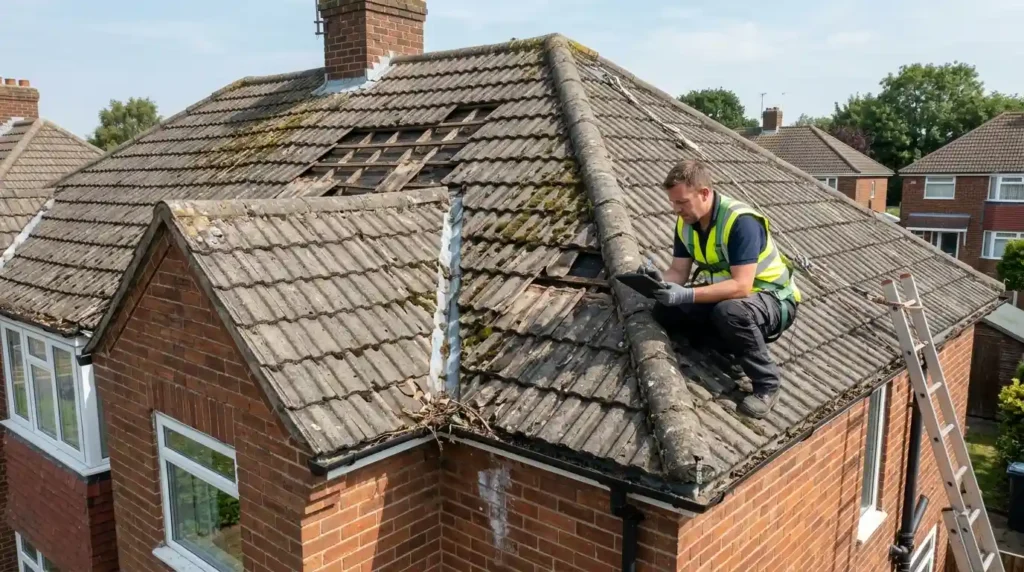
Tiles can crack, slip or break because of weather exposure, strong winds, impact or general ageing. Once the protective covering is compromised, rainwater may reach the roof structure underneath.
Signs this may be the problem
- A visible missing or slipped tile
- Cracked tiles
- Water entering after heavy rain
- Damp patches in the loft
- A leak that appears after strong winds
A roofer can inspect the affected area and determine whether individual tiles can be repaired or replaced.
2. Damaged Roof Flashing
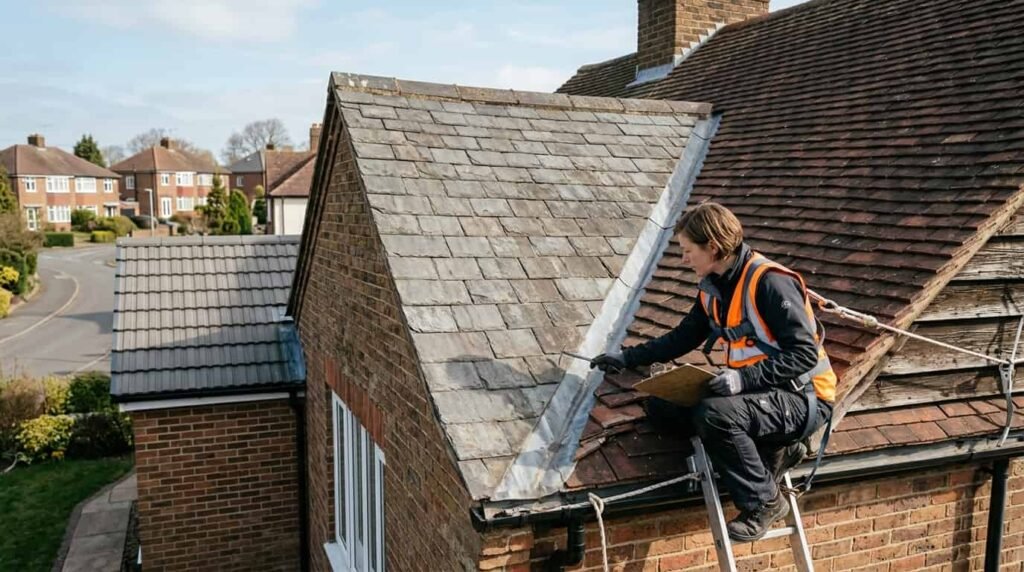
Flashing is used to protect vulnerable areas where the roof meets another structure, such as a chimney, wall, roof valley or roof window.
Over time, flashing can deteriorate, become loose or develop gaps. Water can then enter through the affected joint.
Common flashing problem areas include:
Because these areas are designed to manage water flow, even a relatively small failure can allow water into the property.
3. A Problem Around the Chimney
Chimneys are another common source of roof leaks.
The issue may be caused by damaged flashing, deteriorating mortar, cracked brickwork or other defects around the chimney stack. Water can enter around the base of the chimney and travel into the roof structure.
If you notice damp near a chimney breast or a leak in the surrounding roof area, the problem should be professionally assessed rather than assuming the roof tiles are responsible.
4. Blocked or Damaged Gutters
Gutters are designed to carry rainwater safely away from your property. When they become blocked, damaged or misaligned, water can overflow onto areas that are not designed to handle continuous water exposure.
Common causes include:
- Leaves and debris
- Moss
- Damaged gutter joints
- Cracked gutter sections
- Blocked downpipes
Overflowing water can affect fascias, roof edges and walls. Regular maintenance can help identify guttering problems before they contribute to more serious water damage.
5. Worn or Damaged Roofing Materials
Every roofing material has a limited lifespan.
As a roof ages, materials may become less effective at keeping water out. The condition of the roof depends on factors such as:
- The type of material
- Previous repairs
- Weather exposure
- Installation quality
- Maintenance history
An ageing roof does not always need complete replacement. A professional inspection can help determine whether targeted repairs are appropriate or whether more extensive work should be considered.
6. A Leak in a Flat Roof
Flat roofs require particular attention because water does not run off them in the same way as a pitched roof.
A leak may be caused by:
- Cracks or splits in the roofing surface
- Failed joints or seams
- Damaged flashing
- Ageing roofing material
- Water ponding on the surface
The source of a flat roof leak may not always be obvious. Water can enter through a small defect and spread beneath the surface before becoming visible inside the property.
7. Damaged Roof Valleys
A roof valley is the area where two roof slopes meet.
Because valleys channel a large amount of rainwater, they can become vulnerable if the material is damaged or incorrectly sealed. Problems in this area can cause leaks during periods of heavy rainfall.
A roofer should inspect the valley for damaged materials, gaps or other signs that water is entering beneath the roof covering.
8. Poorly Sealed Roof Penetrations
Anything that passes through a roof can create a potential entry point for water if it is not properly sealed.
Examples may include:
- Roof vents
- Pipes
- Skylights
- Other roof fixtures
The problem may be with the seal around the penetration rather than the main roofing material itself. This is why an accurate inspection is important before starting repairs.
9. Condensation That Looks Like a Roof Leak
Not every water problem in a loft is caused by rain entering through the roof.
Poor ventilation can lead to condensation, especially when warm, moist air meets cold surfaces. This can create dampness that may be mistaken for a roof leak.
A professional assessment can help distinguish between:
- Rainwater penetration
- Condensation
- Plumbing leaks
- Other sources of moisture
Identifying the actual cause is essential because the wrong repair will not solve the problem.
10. Storm or Wind Damage
Strong winds and severe weather can cause sudden roof damage.
Storm-related problems may include:
- Missing or displaced tiles
- Damaged flashing
- Loose roof components
- Fallen debris
- Damage around chimneys
- Water entering through newly exposed areas
If a leak begins immediately after severe weather, it is important to have the roof checked as soon as it is safe to do so.
How Do You Know Where a Roof Leak Is Coming From?
The location of a ceiling stain does not always identify the source of the leak.
Water can travel from the point where it enters before appearing somewhere else inside the property. A proper inspection may involve checking:
- The loft or roof space
- The roof covering
- Tiles or slates
- Flashing and valleys
- Chimney areas
- Gutters and roof edges
- Flat roof surfaces, where applicable
For safety reasons, avoid climbing onto a wet or damaged roof yourself.
What Should You Do When Your Roof Starts Leaking?
1. Protect the inside of your property
Move furniture and valuables away from the affected area where possible.
Use a suitable container to catch dripping water and take steps to reduce further damage.
2. Do not climb onto the roof during dangerous conditions
Wet roofs can be extremely slippery. If the leak occurs during heavy rain or a storm, wait for safe conditions and contact a professional.
3. Take photos of visible damage
If it is safe to do so, photographs can help document:
- Ceiling stains
- Visible water damage
- Broken or missing tiles
- Storm-related damage
4. Arrange a professional inspection
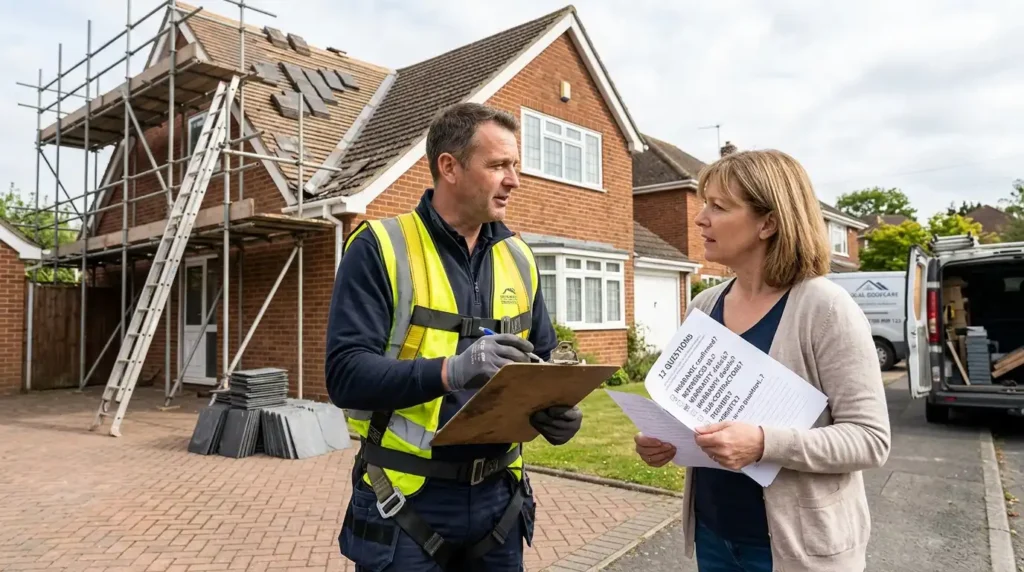
A roofer can investigate the source of the problem and recommend the appropriate repair.
Can a Leaking Roof Be Repaired Without Replacing the Whole Roof?
Yes, in many cases a roof leak can be repaired without replacing the entire roof.
The solution depends on the cause. For example, a problem may involve:
- Replacing damaged tiles
- Repairing flashing
- Fixing a roof valley
- Repairing a flat roof surface
- Addressing damaged guttering
- Repairing a chimney area
A complete roof replacement may be considered when the roof has widespread deterioration or repeated failures. An inspection should come before deciding between repair and replacement.
Is a Small Roof Leak Serious?
A small roof leak can become serious if it is ignored.
Water entering the roof structure may gradually cause damage that is not immediately visible. Over time, this can affect insulation, timbers, ceilings and other parts of the property.
The safest approach is to investigate persistent dampness, water stains or recurring leaks before the problem becomes larger.
When Is a Roof Leak an Emergency?
A roof leak may require urgent professional attention when:
- Water is actively entering the property
- The leak becomes severe during a storm
- A section of the roof has been damaged or displaced
- There is a risk of water reaching electrical systems
- The roof structure appears unsafe
- Storm damage has exposed part of the property
If there is an immediate safety risk, prioritise the safety of everyone in the property and contact the appropriate emergency service where necessary.
How Can You Help Prevent Future Roof Leaks?
Regular maintenance can help identify problems before they become major leaks.
Useful preventative steps include:
- Inspecting the roof from ground level
- Looking for damaged or missing tiles
- Checking for signs of water damage in the loft
- Keeping gutters and downpipes clear
- Arranging inspections after significant storms
- Addressing small defects promptly
- Monitoring chimneys, flashing and roof edges
A professional roof inspection is particularly useful when you notice changes but cannot safely identify the cause.
Need Help With a Leaking Roof?
If you have noticed water stains, damaged tiles, a recurring roof leak or other signs of roof damage, Smart Roofing LTD can assess the condition of your roof and recommend the most suitable solution.
Our roofing services include roof repairs, new roof installations, flat roofing, chimney repairs, gutters and fascias, and support for urgent roofing problems. For properties across our service areas, contact our team to discuss the issue and arrange a professional assessment.
Frequently Asked Questions
Can a roof leak stop on its own?
A roof leak may appear to stop when the rain stops, but the underlying defect is still likely to remain. The source should be identified and repaired to reduce the risk of future water damage.
How do roofers find the source of a leak?
Roofers inspect the roof covering, flashing, valleys, chimney areas, gutters and other vulnerable points. They may also inspect the loft because the visible water stain may not be directly below the point where water enters.
Is a small roof leak serious?
Yes. Even a small leak can allow moisture into the roof structure over time. Early investigation can help prevent more extensive damage.
Can I repair a leaking roof myself?
Minor maintenance may sometimes be possible, but working on a roof can be dangerous. The correct repair also depends on accurately identifying the source of the leak, so professional assessment is often the safer option.
When should I call an emergency roofer?
Consider urgent roofing assistance when water is actively entering the property, storm damage has exposed part of the roof, or there is a potential safety risk that cannot safely wait for routine repairs.